
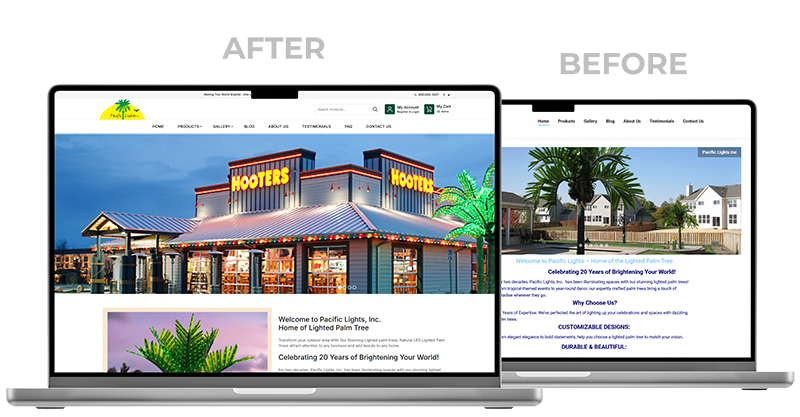
A lot of business owners assume that if their website feels outdated, slow, or ineffective, the only solution is a full rebuild. New platform. New design. New everything. In reality, that is often unnecessary, expensive, and disruptive.
Modernizing a website does not always mean starting from scratch. In many cases, you can dramatically improve performance, usability, and appearance by upgrading specific parts of the site while keeping the foundation intact.
Here is how to modernize your website without rebuilding everything.
Start With Performance, Not Design
Before touching visuals, look at how your website actually performs.
Common modernization wins include improving page speed, fixing mobile responsiveness, and cleaning up bloated code or outdated plugins. A site that loads fast and works smoothly on phones already feels more modern, even if the design has not changed yet.
Performance upgrades usually involve image optimization, caching improvements, and server level adjustments rather than a full redesign. These changes alone can improve SEO and user experience almost immediately.
If your site is slow or unstable, even the best design will not help. This is often the most cost effective place to start.
Update Key Pages Instead of the Entire Site
Most websites only rely on a handful of pages to convert visitors. Your homepage, services pages, and contact or booking pages usually do the heavy lifting.
Instead of rebuilding everything, focus on modernizing the pages that matter most. This might mean refining layout spacing, improving typography, updating calls to action, or restructuring content for clarity.
For example, your services pages can be refreshed to better explain value, add social proof, and guide visitors toward the next step without changing the entire site structure.
If you offer professional services, this is often where targeted updates make the biggest difference. Examples include industry focused builds like https://deepthreedesign.com/website-design/ or niche specific layouts such as https://deepthreedesign.com/author-websites/ and https://deepthreedesign.com/realtor-websites/.
Refresh the Visual System, Not the Brand
A modern website does not require a full rebrand. Small visual updates go a long way.
This includes adjusting fonts, improving contrast, updating button styles, refining spacing, and simplifying layouts. Many older websites feel dated because they are cluttered or inconsistent, not because the brand itself is bad.
Updating the visual system while keeping your logo and brand colors intact preserves recognition while making the site feel current.
For online stores, subtle layout and UX improvements can dramatically impact sales without touching the backend. You can see examples of streamlined, conversion focused updates at https://deepthreedesign.com/e-commerce-websites/.
Improve Navigation and User Flow
Modern websites prioritize clarity. Visitors should immediately understand where they are, what you offer, and what to do next.
You can modernize your site by simplifying menus, reducing unnecessary pages, and improving internal linking. This helps users move through the site naturally and helps search engines understand your content better.
Often, this means removing more than adding. Cleaner navigation and clearer page hierarchy create a modern experience without rebuilding anything.
Add Modern Features Incrementally
You do not need to add every new feature at once. Modernization works best in phases.
Adding things like improved forms, scheduling tools, better galleries, testimonials, or SEO enhancements can be done incrementally. Each upgrade improves functionality without disrupting the rest of the site.
This approach is especially helpful for businesses that rely on their website daily and cannot afford downtime.
When a Partial Rebuild Makes Sense
Sometimes modernization reveals deeper issues. If your site is built on an outdated platform or has structural limitations, selective rebuilding may be necessary.
The key difference is intent. Instead of tearing everything down, you preserve what works and rebuild only what does not. This keeps costs controlled and timelines manageable.
A professional audit can usually identify whether you need updates, partial rebuilds, or a full redesign.
Modernization Is About Strategy, Not Trends
A modern website is not defined by flashy animations or trendy layouts. It is defined by clarity, speed, usability, and alignment with your business goals.
If your website already has a solid foundation, modernization is often about refinement rather than replacement.
If you are unsure where to start, reviewing your current site against your goals is the best first step. You can explore examples and services at https://deepthreedesign.com/ or see how modernization applies across different industries through https://deepthreedesign.com/website-design/.
A smarter upgrade strategy saves time, money, and frustration while still delivering results.